
More About Kai-Zen™
Blog

Leverage Is a Tool, Not a Benefit by Itself
Leverage is familiar to successful executives and business owners.
Companies borrow to expand, purchase equipment, acquire real estate, or preserve working capital. The value is not in borrowing itself. The value comes from what the borrowed capital allows the business to accomplish.
The same principle applies when leverage is used in a financial strategy.
More financing does not automatically create a better outcome.
The structure, cost, assumptions, and exit plan matter just as much as the amount being financed.


Kai-Zen is a premium-financing strategy involving permanent life insurance.
At a simplified level, the insured makes a contribution and third-party financing provides additional premium funding. Those funds support a life insurance policy designed around the individual's financial objectives.
The financing is borrowed capital, not free money or a bank match.
The potential advantage is that financing may allow a qualified individual to fund a larger policy than personal contributions alone would support while preserving more personal capital for other priorities.
But that advantage only matters if the complete structure makes financial sense.
Leverage Comes With a Cost
Financing introduces variables that should be understood from the beginning.
Interest rates matter because borrowing has a cost. Policy performance matters because the strategy relies partly on how the underlying policy performs over time.
An insurance illustration can help explain how a strategy is designed to work, but an illustration is not a guarantee.
That is why a useful review should consider more than the favorable scenario.
What happens if borrowing costs increase?
What happens if policy performance is lower than illustrated?
Understanding those possibilities is part of evaluating the strategy.
The Exit Plan Matters
A leveraged strategy should have a clear explanation of how the financing is expected to be resolved.
This is particularly important because Kai-Zen is designed with a long-term time horizon.
Financial circumstances can change. Interest rates can change. Policy performance can differ from assumptions. A client's income, business, family priorities, or liquidity needs may also look very different years from now.
An exit strategy does not require predicting every future event.
It means understanding how the financing is intended to work over time, what happens to the outstanding loan, and what alternatives may be available if the original assumptions change.
Those questions belong at the beginning of the conversation, not at the end.
Who Is It Actually For?
A high income alone does not make someone an appropriate candidate for Kai-Zen.
Financial capacity matters. Liquidity matters. Insurance eligibility matters. The time horizon matters. Existing retirement assets, insurance coverage, family objectives, and tolerance for financing risk should all be considered.
For the right individual, using financing may help preserve personal capital while supporting larger insurance and long-term planning objectives.
The strategy should fit the financial need, rather than trying to make the financial need fit the strategy.
Final Thought
Leverage can be a useful financial tool.
But leverage itself is not the benefit.
The benefit has to come from what the structure is designed to accomplish after considering financing costs, policy performance, collateral requirements, and risk.
That is why a Kai-Zen conversation should not begin with the largest number on an illustration.
It should begin with understanding how the strategy works.
Before using leverage, which would you want explained first: the cost, the risk, or the exit plan?
Understand the Structure Before the Illustration
If you're considering Kai-Zen or another leveraged insurance strategy, Cornell Financial Group can help you understand how the financing, policy design, risks, and long-term objectives work together.
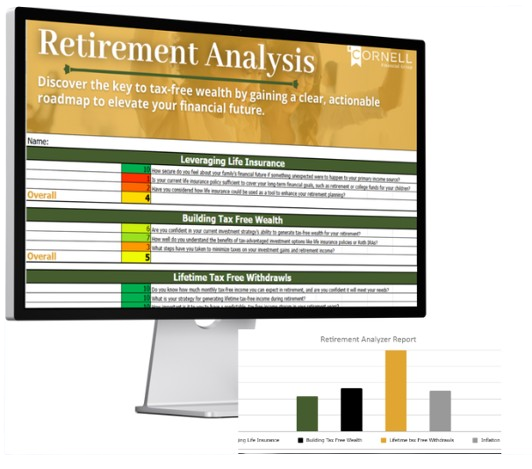
Schedule a Retirement Analysis review with Cornell Financial Group.

This Is The Reason You Feel Lost
In “This Is The Reason You Feel Lost,” the message talks about how easy it is to feel like you have no direction when your life becomes centered on your own plans, worries, and expectations instead of God. We can have a job, relationships, goals, and everything looking fine from the outside, yet still feel empty or unsure about where we are going. The message explains that this feeling can become stronger when we depend only on our own understanding and allow the pressures and distractions of the world to guide our decisions.
What really stands out is the reminder that God is the one who gives our lives true direction and purpose. Instead of trying to figure everything out alone, we are encouraged to seek Him through prayer, Scripture, and obedience. Feeling lost can become an opportunity to stop, examine where our lives are headed, and turn our attention back to God. We may not immediately know every step ahead, but when we trust Him and allow Him to lead, we can move forward knowing that our lives have a purpose beyond what we can see right now.


Creating Tax Free Wealth For Business Owners
Kai-Zen was first introduced in 2012 by NIW. The underlying financial approach has been utilized by wealthy individuals and estates (typically $10M and over) since the 1960s. Kai-Zen is a new variation on this approach - allowing highly compensated individuals like yourself to participate in this type of leveraging for the first time.
Learn More About Kai-Zen™
Take Comfort in Understanding Your Strategy!
No one knows what will happen in the future but looking at the past uncovers some common patterns. Stressing our designs through some of the harshest economic conditions to date allows us to implement a strategy to help protect against potential future failures and optimizes our chances for a more successful outcome.
"Let us not become weary in doing good, for at the proper time we will reap a harvest if we do not give up."
- Galatians 6:9 (NIV)
Home
Our Story
Kai-Zen™
Resources Center
Unlock the path to tax-free wealth and watch your business flourish like never before.


An Independent Licensed Agent Representing NIW Companies, Inc. Creators of The Kai-Zen Plan
Cornell Financial Group © Copyright 2026 | All Rights Reserved