
More About Kai-Zen™
Blog

Your Bonus Just Got More Expensive (And Most Executives Don't Know It Yet)

A $75,000 bonus sounds like good news. For a growing number of executives in 2026, it isn't — not once it lands.
Buried inside last year's One Big Beautiful Bill Act (OBBBA) is a set of phase-outs that quietly punish the exact income spikes executives are most likely to see: bonuses, vesting stock, year-end payouts. Cross the wrong threshold and a raise can lower take-home pay. At this income level, the number on the offer letter has never mattered less than the number that actually lands in the account.

What Changed This Year

Charitable Giving Now Has a Floor
Starting in 2026, only the portion of charitable giving above 0.5% of adjusted gross income is deductible. On $800,000 of income, the first $4,000 given away provides no tax benefit at all. Executives who give consistently need to rethink the timing and structure of those gifts, not just the amount.
The 37% Top Rate Is Now Permanent
Without OBBBA, the top rate was scheduled to jump to 39.6% this year. That didn't happen. The rate holds at 37%, and the seven-bracket structure stays in place. Good news on its face, but a stable rate on ordinary income only matters if a strategy exists to avoid recognizing that income in the first place.
The Mega Backdoor Roth Got More Room
Executives whose 401(k) plans allow after-tax contributions can now direct up to $47,500 into a Roth 401(k) for 2026, on top of standard limits, up to a combined $72,000. That money grows tax-free. It is one of the few remaining moves inside a qualified plan that still works in an executive's favor, and most people eligible for it have never used it.
Deferred Compensation Cuts Both Ways
Nonqualified deferred compensation plans still let executives push income — and the tax bill that comes with it — into a lower-earning year down the road. But Section 409A governs every detail of how and when that election gets made. One misstep triggers an automatic 20% excise penalty. This is not a do-it-yourself form to fill out in December.
The IRS Is Watching Its Own Behavior, Too
In early August, the IRS rolled out an automatic penalty relief process for taxpayers with a clean history of filing and paying on time. It's a small administrative shift, but it signals something bigger: the agency is tightening enforcement in some areas (phishing schemes targeting tax professionals made headlines this week) while streamlining compliance in others. The rules are moving. Standing still is its own decision.
The Real Question Behind All of This
Every one of these updates rewards the same thing: income that never has to be taxed again. A Roth dollar isn't touched by a new phase-out. A tax-free retirement income stream doesn't care whether the top rate is 37% or 39.6%. That's the whole premise behind a strategy like Kai-Zen — building a stream of tax-free retirement income where a portion of the funding is matched, dollar for dollar and more, so growth compounds outside the reach of whatever Congress decides to do next.
None of this requires a reaction to every headline. It requires a structure that makes most of the headlines irrelevant.
Wondering how this year's changes affect your specific situation? A short conversation is often enough to find out.
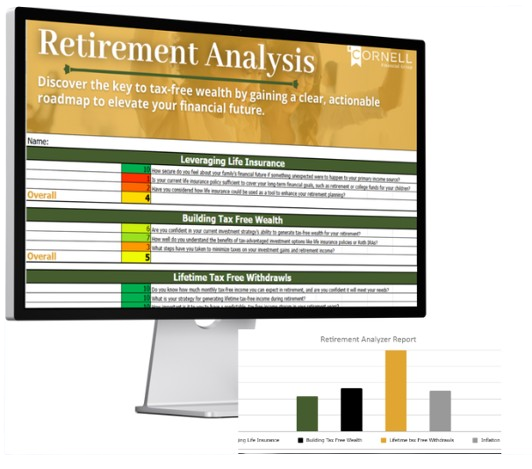
Get Your Free Retirement Analysis Now!

What Did Jesus Mean by "This Generation Will Not Pass Away"?
“What Did Jesus Mean by ‘This Generation Will Not Pass Away’?” explores Jesus’ statement in Matthew 24:34, where He says that “this generation” will not pass away until the things He described take place. The discussion focuses on the meaning of the phrase in its biblical and prophetic context, especially Jesus’ teaching about the destruction of the temple, future tribulation, His return, and the signs of the end times. A major question is whether “this generation” refers specifically to the people living during Jesus’ time, the generation that would witness the future signs, or another biblical meaning of “generation.”
The message encourages listeners to interpret Jesus’ words carefully rather than using the passage to predict a specific date for His return. It emphasizes that Christ’s warnings were intended to produce watchfulness, faithfulness, and spiritual readiness. The central takeaway is that, regardless of how “this generation” is interpreted, Jesus calls His followers to take His words seriously, recognize that God’s promises will be fulfilled, and remain prepared for His coming rather than becoming distracted by speculation about exact timelines.

Creating Tax Free Wealth For Business Owners
Kai-Zen was first introduced in 2012 by NIW. The underlying financial approach has been utilized by wealthy individuals and estates (typically $10M and over) since the 1960s. Kai-Zen is a new variation on this approach - allowing highly compensated individuals like yourself to participate in this type of leveraging for the first time.
Learn More About Kai-Zen™
Take Comfort in Understanding Your Strategy!
No one knows what will happen in the future but looking at the past uncovers some common patterns. Stressing our designs through some of the harshest economic conditions to date allows us to implement a strategy to help protect against potential future failures and optimizes our chances for a more successful outcome.
"Let us not become weary in doing good, for at the proper time we will reap a harvest if we do not give up."
- Galatians 6:9 (NIV)
Home
Our Story
Kai-Zen™
Resources Center
Unlock the path to tax-free wealth and watch your business flourish like never before.


An Independent Licensed Agent Representing NIW Companies, Inc. Creators of The Kai-Zen Plan
Cornell Financial Group © Copyright 2026 | All Rights Reserved