More About Kai-Zen™
Blog

The World Is Changing Faster Than Your Financial Plan.

Why today's headlines should change the way you think about your financial future—not your investment decisions.
Every week seems to bring another headline that reminds us how quickly the world is changing.
In recent weeks, we've seen ongoing discussions about tariffs, government spending, inflation, interest rates, and continued market uncertainty. One of the latest headlines involved the Trump administration pausing over $1 billion in Medicaid payments to two states while officials review documentation.
Whether you agree or disagree with any of these policies isn't the point.
The bigger lesson is this: government priorities change, economic conditions evolve, and markets respond.
If your financial strategy depends on the world remaining predictable, you're relying on something history has proven impossible.


It's easy to get caught up in the news cycle.
Every policy announcement, market swing, or economic report sparks a new wave of opinions and predictions. Financial media thrives on urgency, encouraging investors to react to every development.
But successful wealth building has never been about reacting to headlines.
It's about asking a more important question:
Is your financial plan built to succeed regardless of what happens next?
The reality is that administrations change. Tax laws change. Interest rates rise and fall. Markets experience periods of growth and correction. These shifts aren't exceptions—they're part of the financial landscape.
The investors and business owners who build lasting wealth understand this. Rather than trying to predict every change, they focus on creating strategies that can adapt through change.
Welcome to the New Era of Wealth
We're entering a new era unlike anything we've experienced before.
Artificial intelligence is reshaping industries at an unprecedented pace. Government debt continues to grow. Inflation remains a concern for households and businesses alike. Tax policy is likely to remain a topic of debate, and markets continue to respond to global events in real time.
This isn't just another market cycle.
It's a reminder that financial planning today requires a different mindset than it did even a decade ago.
The question is no longer simply,"How do I grow my wealth?"
It's also:
How do I protect it?
How do I keep more of what I earn?
How do I create flexibility regardless of future tax changes?
How do I prepare for uncertainty instead of fearing it?
These are the questions that define modern wealth planning.
What Successful Executives Do Differently
Higher-income professionals and business owners often spend years learning how to earn more.
Far fewer spend the same amount of time learning how to preserve and position their wealth efficiently.
The most successful executives don't build financial plans around today's headlines. They build them around enduring principles.
They focus on:
Keeping more of what they earn through thoughtful tax planning.
Maintaining liquidity for opportunities and unexpected events.
Diversifying beyond a single retirement strategy.
Preparing for multiple economic scenarios instead of relying on one prediction.
Making financial decisions based on long-term objectives rather than short-term emotions.
These principles don't change every election cycle or market correction.
They provide stability when everything else feels uncertain.
Prepare for Change—Don't React to It
No one can accurately predict the next headline.
No one knows exactly what tax legislation will look like five years from now, where interest rates will settle, or what the markets will do next quarter.
But you don't need certainty to build confidence.
You need a strategy that's designed to adapt.
Financial planning isn't about guessing the future.
It's about preparing for it.
The individuals who navigate uncertainty most successfully aren't necessarily the ones who predict change—they're the ones who prepare for it before everyone else does.
Final Thoughts
The headlines will continue.
Markets will rise and fall.
Governments will introduce new policies.
Technology will continue to transform the economy.
Those realities are beyond our control.
What remains within our control is how we prepare.
The question isn't what tomorrow's headline will be.
The question is whether your financial strategy is built to weather whatever tomorrow brings.
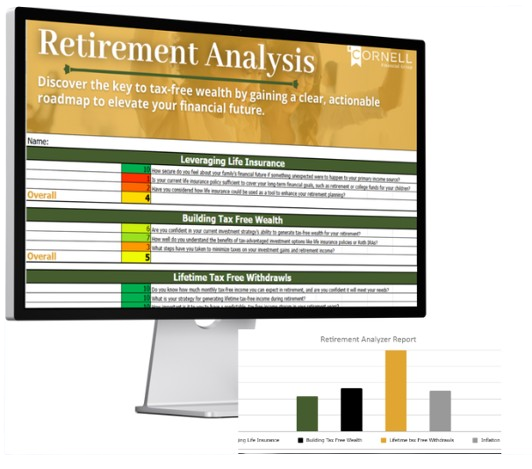
Get Your Free Retirement Analysis Now!

Israel Is Not Forgotten by God
“Israel Is Not Forgotten by God” focuses on the biblical teaching that God’s covenant with Israel remains significant and that His promises to the nation have not been abandoned. Drawing from passages such as Romans 9–11 and Old Testament prophecies, the message explains that although Israel has experienced periods of judgment and unbelief, God continues to work out His redemptive plan. Amir emphasizes that God's faithfulness is demonstrated by His unwavering commitment to the covenants He made with Abraham, Isaac, Jacob, and their descendants.
The message also highlights the relationship between Israel and the Church, encouraging believers to recognize God's ongoing purposes for both. Rather than viewing Israel as rejected, the sermon teaches that God's plan includes a future restoration and spiritual renewal for the nation according to many prophetic interpretations. Listeners are encouraged to trust God's faithfulness, pray for the peace of Israel, and remember that His promises are fulfilled according to His perfect timing and sovereign plan.

Creating Tax Free Wealth For Business Owners
Kai-Zen was first introduced in 2012 by NIW. The underlying financial approach has been utilized by wealthy individuals and estates (typically $10M and over) since the 1960s. Kai-Zen is a new variation on this approach - allowing highly compensated individuals like yourself to participate in this type of leveraging for the first time.
Learn More About Kai-Zen™
Take Comfort in Understanding Your Strategy!
No one knows what will happen in the future but looking at the past uncovers some common patterns. Stressing our designs through some of the harshest economic conditions to date allows us to implement a strategy to help protect against potential future failures and optimizes our chances for a more successful outcome.
"Let us not become weary in doing good, for at the proper time we will reap a harvest if we do not give up."
- Galatians 6:9 (NIV)
Home
Our Story
Kai-Zen™
Resources Center
Unlock the path to tax-free wealth and watch your business flourish like never before.


An Independent Licensed Agent Representing NIW Companies, Inc. Creators of The Kai-Zen Plan
Cornell Financial Group © Copyright 2026 | All Rights Reserved