More About Kai-Zen™
Blog

Why Market Volatility This Summer Might Be the Best News You've Had All Year

Let me ask you something most financial advisors will never ask: why does market volatility scare you more than it scares the people who are actually getting wealthier from it?
Every summer, the headlines start up. Trade tension here, a surprise rate decision there, a sell-off that wipes a few percent off the indexes in a single afternoon. And every summer, executives like you watch their statements and feel that familiar tightening in the chest.

The Real Problem Isn't Volatility

Here's what almost nobody explains: volatility is only dangerous to money that has nowhere safe to stand.
If every dollar you own is fully exposed to market swings, of course, a rough week feels like a crisis — your net worth is genuinely moving with the headlines. But that's a structural problem with where your wealth lives, not a problem with the market itself.
Consider two executives with the same $2 million net worth. One has it entirely in market-correlated accounts. The other has a meaningful portion structured with downside protection built in. When the market drops 12% in a quarter — which has happened multiple times in the last decade — the first executive watches $240,000 evaporate on paper. The second executive's protected portion doesn't move. Same market. Wildly different summer.
How the Wealthy Actually Use Volatility
The wealthy don't avoid volatility — they build structures where volatility in the market doesn't touch the floor under their money. Strategies like Kai-Zen are designed with that floor baked in: your growth can track market upside through indexed crediting, while a contractual floor protects against the downside, and the entire structure grows tax-free.
That means when the headlines panic everyone else, you're not checking your statement every hour. You're not making fear-based decisions in July that you'll regret in December, when the temporary dip has already recovered and you've locked in a loss you didn't need to take.
The Behavioral Cost Nobody Talks About
There's a second, less obvious cost to volatility: it makes good investors do bad things. Studies on investor behavior consistently show that the people most rattled by short-term swings are also the ones most likely to sell at the bottom and buy back in late — the single most common way to permanently impair returns. Protecting the floor under your money doesn't just protect your balance. It protects your decision-making.
The Question That Actually Matters
The question isn't whether markets will be volatile this summer. They will be — that's simply what markets do. The real question is whether your wealth is structured to care.
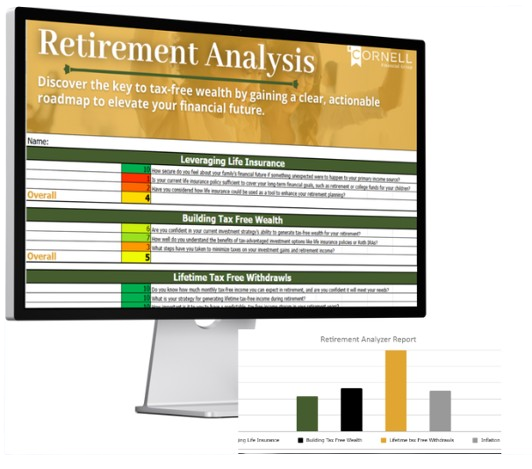
Get Your Free Retirement Analysis Now!

The Hopelessness of the Stubbornly Blind (John9:35-41) | John MacArthur
John MacArthur’s sermon “The Hopelessness of the Stubbornly Blind” focuses on Gospel of John 9:35–41, where Jesus confronts the spiritual blindness of the Pharisees after healing a man who had been physically blind. MacArthur explains that the deeper issue in this passage is not a lack of information, but a refusal to accept the truth. The Pharisees witnessed Jesus’ power and heard His claims, yet their pride and hardened hearts prevented them from recognizing Him as the Son of God. The sermon emphasizes that spiritual blindness is dangerous because it keeps people from seeing their need for God and their dependence on Christ.
MacArthur also contrasts the humble response of the healed man with the arrogance of the religious leaders. The man who was once blind came to believe and worship Jesus, while those who claimed to see remained lost because they trusted in their own righteousness. The message teaches that true sight comes through humility, repentance, and faith in Christ, while stubborn pride leads to greater blindness. MacArthur warns that the greatest obstacle to knowing God is not ignorance, but a heart that refuses to submit to the truth.

Creating Tax Free Wealth For Business Owners
Kai-Zen was first introduced in 2012 by NIW. The underlying financial approach has been utilized by wealthy individuals and estates (typically $10M and over) since the 1960s. Kai-Zen is a new variation on this approach - allowing highly compensated individuals like yourself to participate in this type of leveraging for the first time.
Learn More About Kai-Zen™
Take Comfort in Understanding Your Strategy!
No one knows what will happen in the future but looking at the past uncovers some common patterns. Stressing our designs through some of the harshest economic conditions to date allows us to implement a strategy to help protect against potential future failures and optimizes our chances for a more successful outcome.
"Let us not become weary in doing good, for at the proper time we will reap a harvest if we do not give up."
- Galatians 6:9 (NIV)
Home
Our Story
Kai-Zen™
Resources Center
Unlock the path to tax-free wealth and watch your business flourish like never before.


An Independent Licensed Agent Representing NIW Companies, Inc. Creators of The Kai-Zen Plan
Cornell Financial Group © Copyright 2026 | All Rights Reserved