More About Kai-Zen™
Blog

How Executives Are Redefining Wealth in the Post-Pandemic Economy

The Shift Happening in Executive Boardrooms — and Living Rooms
Something changed in the way higher-income Americans think about money after 2020. The pandemic, followed by historic inflation, followed by the fastest Federal Reserve rate-hiking cycle in forty years, forced a reckoning that a long bull market had delayed. Earning well was no longer enough. Keeping well — and passing on well — became the new conversation.
According to a 2024 Fidelity study on affluent investor sentiment, 71% of high-net-worth individuals under age 55 cited tax efficiency as their top financial concern, outranking both market performance and income growth. That is a significant shift in the American wealth psyche — and it is reshaping what smart financial planning looks like.

Three Myths About Executive Wealth That Need to Go

MYTH 1: A strong 401(k) is enough for retirement security.
The 401(k) contribution limit in 2025 is $23,500 (plus $7,500 catch-up for those 50+). For an executive earning $500,000, that represents less than 5% of income going into a tax-deferred vehicle. The rest is either invested in taxable accounts — subject to capital gains and ordinary income taxes — or simply not saved. That is a structural gap that requires structural solutions.
MYTH 2: Life insurance is just a death benefit product.
The modern generation of Indexed Universal Life policies used in Kai-Zen strategies bears little resemblance to the whole life products of the 1980s. These are sophisticated financial instruments that provide tax-free accumulation, market-linked growth with downside protection, tax-free retirement income, and death benefit as an ancillary feature — not the primary purpose.
MYTH 3: High income means financial security.
Income and wealth are different things. A W-2 executive with no ownership in a business, no passive income streams, and no tax-efficient accumulation strategy outside a retirement plan is one career disruption away from financial vulnerability — regardless of current salary. True financial security comes from assets that produce income independent of employment.
Prosperity is not just what you earn. It is what you keep, grow, and eventually pass on — on your own terms.
What Legacy-Focused Planning Looks Like in 2025
The executives who are most financially prepared heading into the second half of the decade share a few common traits. They have diversified beyond the public markets into tax-advantaged strategies. They have structured their estate in advance of anticipated tax law changes. They are using leverage intelligently — not speculatively — to amplify growth without proportionally amplifying risk.
And many of them are using the Kai-Zen method as a foundational piece of that strategy — not because it is trendy, but because it solves multiple problems simultaneously: tax-free accumulation, leverage-amplified growth, downside protection, and estate planning efficiency all in a single structure.
Elevating Your Prosperity — What That Actually Means
Kent Cornell, CFP®, built his practice around a single conviction: executives deserve financial advice that matches the complexity of their situation. The Kai-Zen method is not a one-size-fits-all product — it is a customized strategy that requires a thorough understanding of income structure, tax situation, timeline, and goals.
The most powerful thing any higher-income professional can do right now is get an honest, numbers-based picture of what the current path actually produces — and what an optimized path could look like instead. That picture often changes everything.
READY TO TAKE ACTION?
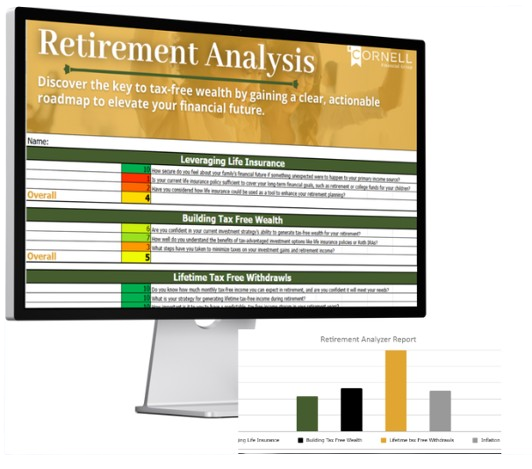
Get Your Free Retirement Analysis Now!

You'll Need This To Be Wise (Proverbs)
-Jack Hibbs
Jack Hibbs teaches in this message that true wisdom is not just knowledge or life experience, but a way of living rooted in the fear of the Lord as described in the Book of Proverbs. He explains that Proverbs presents wisdom as something practical and daily—shaping how people speak, make decisions, handle money, choose relationships, and respond to correction. The central idea is that wisdom begins when a person recognizes God’s authority and allows His Word to guide their thinking instead of relying solely on human understanding.
He also emphasizes that wisdom protects people from destructive paths and poor choices that often come from pride, emotion, or ignoring instruction. Jack Hibbs highlights how Proverbs repeatedly contrasts the wise and the foolish, showing that the difference is not intelligence but obedience and humility. The message encourages listeners to seek correction, value godly counsel, and guard their hearts, because a life built on biblical wisdom leads to stability, clarity, and spiritual strength even in uncertain times.

Creating Tax Free Wealth For Business Owners
Kai-Zen was first introduced in 2012 by NIW. The underlying financial approach has been utilized by wealthy individuals and estates (typically $10M and over) since the 1960s. Kai-Zen is a new variation on this approach - allowing highly compensated individuals like yourself to participate in this type of leveraging for the first time.
Learn More About Kai-Zen™
Take Comfort in Understanding Your Strategy!
No one knows what will happen in the future but looking at the past uncovers some common patterns. Stressing our designs through some of the harshest economic conditions to date allows us to implement a strategy to help protect against potential future failures and optimizes our chances for a more successful outcome.
"Let us not become weary in doing good, for at the proper time we will reap a harvest if we do not give up."
- Galatians 6:9 (NIV)
Home
Our Story
Kai-Zen™
Resources Center
Unlock the path to tax-free wealth and watch your business flourish like never before.


An Independent Licensed Agent Representing NIW Companies, Inc. Creators of The Kai-Zen Plan
Cornell Financial Group © Copyright 2026 | All Rights Reserved