More About Kai-Zen™
Blog

The Mid-Year Wealth Audit 9 Out of 10 Executives Never Do

Let me ask you something most financial advisors will never ask: when was the last time you audited your wealth strategy the same way you audit your company's P&L every quarter?
If you're like most high-earning executives, the honest answer is "never." You review your investment statements when they land in your inbox. You glance at your 401(k) balance once a quarter. But you haven't actually stress-tested the strategy itself since you set it up — possibly years ago, possibly under assumptions that quietly stopped being true.

Why July Is the Month This Catches Up With You

We're at the halfway point of the year. Tax brackets have shifted. Markets have moved. Your income has probably moved too — a promotion, a bonus structure change, new equity comp. And yet most people are still running January's plan in July, on autopilot, hoping it still fits a life that's already changed.
It usually doesn't.
Think of it like steering a ship. A one-degree error in January is a rounding error. That same one-degree error, uncorrected by July, has already put you miles off course — and by December, the gap is even harder to close.
Three Questions a Real Audit Asks
A genuine mid-year audit isn't about checking if your portfolio is "up." It asks three sharper, more uncomfortable questions:
How much of my growth this year will actually be taxed — and at what rate? Most people can't answer this. They know their return; they don't know their after-tax return.
If I lost my income tomorrow, how long would my liquid, tax-free assets carry my family? Not your total net worth — your accessible, tax-free net worth. Those are very different numbers.
Is my money working as hard as I am, or is it just sitting there, waiting? A lot of "safe" money is actually just dormant money — parked, not working.
Why Most Advisors Skip This
Most advisors won't walk you through this audit, because it tends to surface gaps in the very plans they sold you. It's an uncomfortable conversation for them. It's not for me — because my job isn't to manage your money forever. It's to make sure you understand exactly how it's working, including the tax-free growth strategies most of the wealthy reserve for their own balance sheets and rarely share with others .
The Cost of Waiting
Don't wait until December to discover that July's decisions already cost you. A six-month gap in a properly structured tax-free strategy isn't just a delay — it's six months of compounding you don't get back. Audit now. Adjust now. Let the back half of the year compound correctly instead of on autopilot.
READY TO TAKE ACTION?
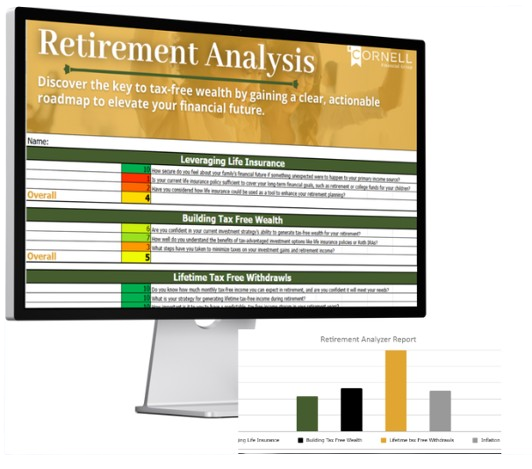
Get Your Free Retirement Analysis Now!

The Mystery of Your New Past | Jonathan Cahn Sermon | Father's Day
Jonathan Cahn’s sermon “The Mystery of Your New Past” explores the idea that when a person encounters God, their past is no longer defined only by mistakes, failures, or regrets. Drawing from biblical themes of redemption and transformation, Cahn explains that God has the power to restore a person’s story and give them a new identity. He connects this message to Father’s Day by highlighting the heart of God as a loving Father who does not abandon His children but welcomes, restores, and gives them a renewed purpose.
The sermon also emphasizes that believers are called to live from their new identity rather than remain trapped by their old one. Cahn teaches that God’s forgiveness changes how people view their history—the painful experiences, failures, and struggles can become part of a testimony of grace. The message encourages listeners to trust God’s ability to redeem their lives, walk in faith, and recognize that through Him, the past does not have the final word.

Creating Tax Free Wealth For Business Owners
Kai-Zen was first introduced in 2012 by NIW. The underlying financial approach has been utilized by wealthy individuals and estates (typically $10M and over) since the 1960s. Kai-Zen is a new variation on this approach - allowing highly compensated individuals like yourself to participate in this type of leveraging for the first time.
Learn More About Kai-Zen™
Take Comfort in Understanding Your Strategy!
No one knows what will happen in the future but looking at the past uncovers some common patterns. Stressing our designs through some of the harshest economic conditions to date allows us to implement a strategy to help protect against potential future failures and optimizes our chances for a more successful outcome.
"Let us not become weary in doing good, for at the proper time we will reap a harvest if we do not give up."
- Galatians 6:9 (NIV)
Home
Our Story
Kai-Zen™
Resources Center
Unlock the path to tax-free wealth and watch your business flourish like never before.


An Independent Licensed Agent Representing NIW Companies, Inc. Creators of The Kai-Zen Plan
Cornell Financial Group © Copyright 2026 | All Rights Reserved