More About Kai-Zen™
Blog

The Wealth-Building Secret Banks Use
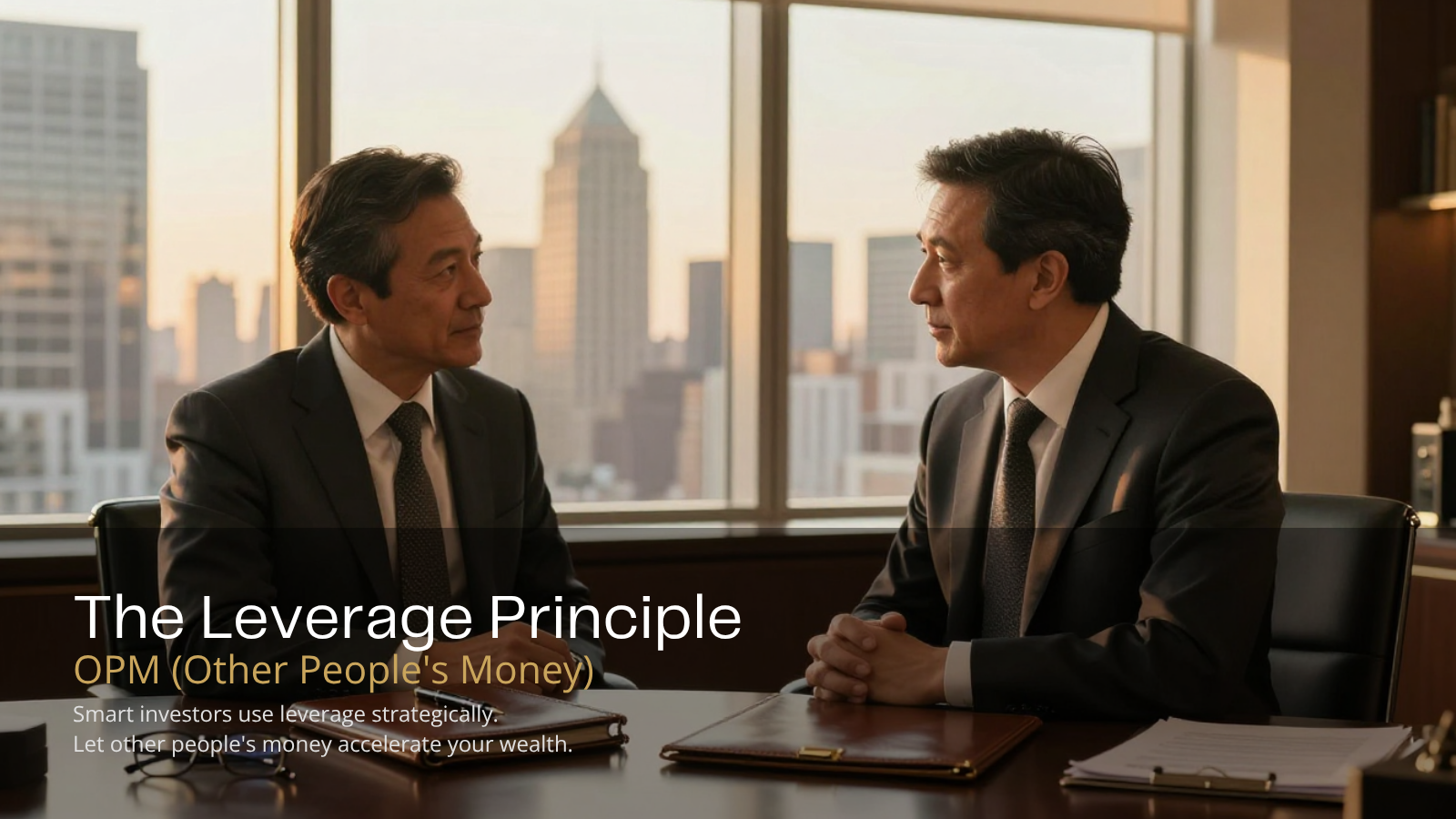
Real estate investors have known it for decades. Private equity firms have built empires on it. Corporations deploy it every single quarter. The principle is simple: when you can borrow at a lower cost than the rate your investment earns, you multiply wealth without multiplying risk proportionally. This is the foundational logic behind OPM — Other People's Money.
What most executives do not realize is that this same principle can be applied directly to a tax-advantaged wealth strategy through something called premium financing — and more specifically, through the Kai-Zen method.


Here is a simplified breakdown of how a Kai-Zen arrangement is structured:
The executive contributes a set amount annually — typically $25,000 to $150,000, depending on income and goals.
An institutional lender (bank) contributes an additional match to that amount in premium financing.
Those combined premiums fund an Indexed Universal Life (IUL) policy that grows based on a stock market index — with a floor of 0%, meaning the account never loses value due to market downturns.
Over 10 to 15 years, the cash value compounds on the fully funded amount, not just the executive's portion.
At retirement, distributions are taken as tax-free policy loans, bypassing ordinary income tax entirely.
Leverage in this context is not speculation. It is engineering — using institutional capital to amplify a tax-protected asset.
The Risk Picture: What Critics Get Wrong
Premium financing is sometimes criticized for interest rate risk or collateral exposure. These are real considerations — and they are also exactly why proper structuring matters. The Kai-Zen method specifically addresses these concerns through:
Fixed or capped financing terms that limit interest exposure.
Policy performance floors that protect the underlying asset from market loss.
Collateral structures that are matched to the policy's own cash value growth over time.
This is not a strategy for every executive. It requires a strong income profile, a multi-year commitment, and a legitimate financial planning relationship — not a product sale. That distinction matters enormously.
A Real-World Illustration (Hypothetical)
Consider a 45-year-old executive earning $600,000 annually in Dallas, Texas. After federal and state taxes, take-home is roughly $360,000. Under a conventional savings and investment strategy, every retirement dollar above traditional 401(k) limits gets taxed as ordinary income upon withdrawal.
Under a properly structured Kai-Zen arrangement, that same executive could be putting $100,000 per year for only five years to work — with a bank financing an additional $100,000 annually — growing a tax-free asset base that distributes over $200,000 per year in retirement income with zero federal income tax liability. That is not hypothetical math. That is the tax code working as designed.
Why This Conversation Is Happening Now
With potential tax rate increases on the horizon and elevated inflation still compressing real purchasing power, more executives are asking harder questions about where their wealth is actually going. The Kai-Zen method is gaining traction in 2025 not because it is new — it is not — but because the economic environment has made the alternative (doing nothing) increasingly costly.
READY TO TAKE ACTION?
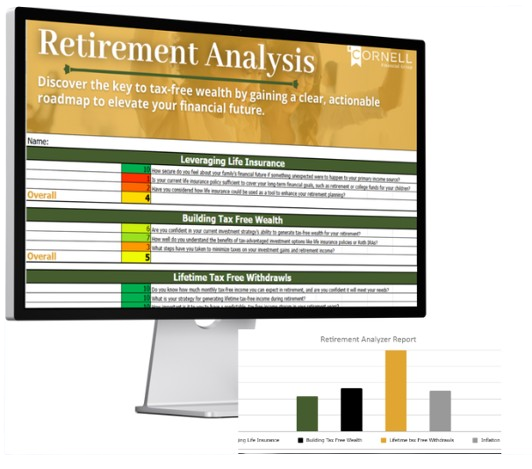
Get Your Free Retirement Analysis Now!

Entering The Secret Place | Jonathan Cahn Sermon
Jonathan Cahn speaks about the “secret place” as a deep and personal relationship with God that goes beyond public worship, religious routines, or outward appearances. Drawing from passages such as Psalm 91, he explains that the secret place is where believers seek God in prayer, intimacy, and surrender. The message emphasizes that spiritual strength, peace, and guidance are found not merely through activity or ministry work, but through spending time alone with God. Cahn encourages listeners to cultivate a consistent prayer life and to make God's presence their dwelling place rather than only seeking Him during times of crisis.
He also teaches that entering the secret place requires setting aside distractions, pride, and self-reliance. In a world filled with noise, pressure, and uncertainty, he argues that believers need a hidden life with God where their faith is strengthened and their hearts are transformed. The sermon challenges Christians to prioritize communion with God above worldly pursuits and reminds them that many of the greatest spiritual victories begin in private before they are seen publicly. According to Cahn, the secret place is where God prepares, protects, and empowers His people to live faithfully and effectively in their daily lives.

Creating Tax Free Wealth For Business Owners
Kai-Zen was first introduced in 2012 by NIW. The underlying financial approach has been utilized by wealthy individuals and estates (typically $10M and over) since the 1960s. Kai-Zen is a new variation on this approach - allowing highly compensated individuals like yourself to participate in this type of leveraging for the first time.
Learn More About Kai-Zen™
Take Comfort in Understanding Your Strategy!
No one knows what will happen in the future but looking at the past uncovers some common patterns. Stressing our designs through some of the harshest economic conditions to date allows us to implement a strategy to help protect against potential future failures and optimizes our chances for a more successful outcome.
"Let us not become weary in doing good, for at the proper time we will reap a harvest if we do not give up."
- Galatians 6:9 (NIV)
Home
Our Story
Kai-Zen™
Resources Center
Unlock the path to tax-free wealth and watch your business flourish like never before.


An Independent Licensed Agent Representing NIW Companies, Inc. Creators of The Kai-Zen Plan
Cornell Financial Group © Copyright 2026 | All Rights Reserved